





Leadership in the Management of Distressed Hotel Assets
In an industry as volatile as hospitality, and especially in the context of hotel management, financial difficulties are often an unavoidable reality. With the advent

The Distressed Hotel Blueprint is the ultimate guide for hotel owners, investors, and hospitality professionals looking to navigate, manage, and revive distressed hotel assets. Packed with expert insights, real-world case studies, and actionable strategies, this book provides a step-by-step approach to turning struggling properties into profitable, high-performing assets.
From identifying the warning signs of distress—such as financial instability, mismanagement, and market downturns—to executing turnaround strategies, this book breaks down every stage of the recovery process. Readers will learn how to conduct operational and financial audits, negotiate with lenders, implement cost-saving measures, and reposition their hotel for long-term success.
Covering crucial topics like bank workouts, refinancing, receivership, asset management, revenue optimization, and branding strategies, The Distressed Hotel Blueprint arms readers with the financial and operational knowledge needed to stabilize and maximize the value of their hotel investments.
Whether you’re an investor looking for opportunities, a hotel owner facing financial challenges, or a consultant seeking proven solutions, this book is your essential resource for transforming distressed properties into thriving, competitive businesses.
A must-read for anyone serious about success in the hospitality industry.
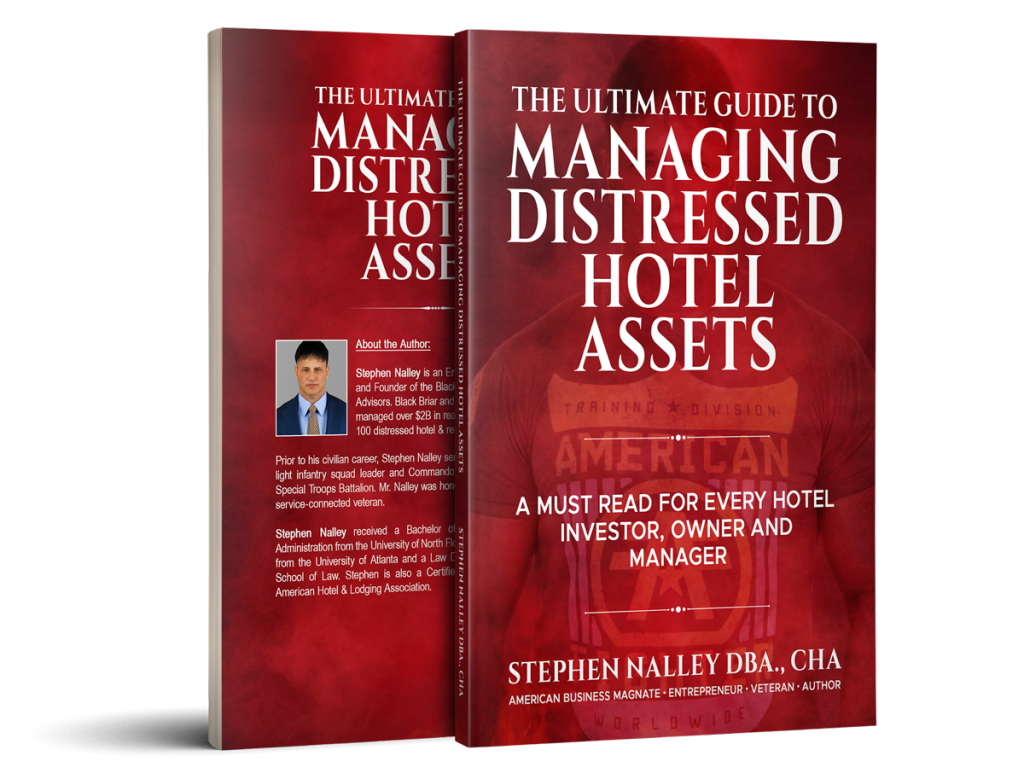
A comprehensive guide to distressed hotel asset management, written by Stephen Nalley, a seasoned professional with a proven track record of success having managed over $2 billion of distressed hotel assets over a 20-year career. The book provides a detailed and practical approach to managing hotels that are in distress, and offers valuable insights and strategies for turning around these properties.
Nalley begins by defining what constitutes a distressed hotel, and outlines the various causes of distress, including economic downturns, changes in market conditions, and operational issues. He then provides a step-by-step process for assessing the extent of the distress, including a thorough analysis of the financials, market conditions, and operational performance.
The book then delves into the various strategies that can be employed to turn around a distressed hotel, including asset repositioning, operational restructuring, and financial restructuring. Nalley provides detailed case studies to illustrate each of these strategies, and offers practical advice for implementing them effectively.
Throughout the book, Nalley emphasizes the importance of collaboration and communication, both within the hotel team and with external stakeholders such as lenders, investors, and vendors. He stresses the need for a clear and realistic turnaround plan, and provides guidance on how to develop and execute such a plan.
Overall, “The Ultimate Guide to Managing Distressed Hotel Assets” is an invaluable resource for hotel owners, operators, and investors who are looking to successfully manage and turn around distressed hotel assets. Nalley’s expertise and experience shine through in the practical and insightful advice he offers, making this book a must-read for anyone involved in the hospitality industry.
Partnering with Allegiant Hotel Partners means working with industry leaders who bring expertise, innovation, and results-driven strategies.

In an industry as volatile as hospitality, and especially in the context of hotel management, financial difficulties are often an unavoidable reality. With the advent


The hospitality industry is no stranger to economic downturns, unforeseen crises, and changing consumer preferences. As a result, hotel assets can sometimes find themselves in

In the ever-evolving landscape of the hospitality industry, hotels occasionally find themselves in a distressed state, facing financial difficulties or struggling to maintain their competitive